What should students learn in a future with AI? Mostly the same.
The skills that mattered most before AI still matter most. But AI puts a brighter spotlight on who masters them, and who does not.

I am building an AI study platform, and while AI changes a lot about how we can learn, I do not believe it changes a lot about what we should learn. But with abundant intelligence at your fingertips, it becomes much clearer who masters the core skills and who does not.
Take problem-solving. It has always been important to define the problem before you dive into solution mode, and many students do not understand how important that first step is. I see it again and again when I teach.
There has always been a premium on people who are good at defining the problem, but with AI it gets even bigger. If you start out wrong, you will very quickly and confidently get an answer to the wrong question. At McKinsey, we used to say that “a well-defined problem is half solved”. In a world with AI, that is truer than ever.
I also hear people ask whether it is even relevant to learn math, history, or to write and communicate well in the future. Can’t AI just do those things? Partly, yes, but it is important to understand that we do not have many of these subjects for their own sake. We have them because they train some fundamental skills in us.
Of course it is important to be able to do simple arithmetic without AI at hand, but beyond that, math is fundamental to becoming a good problem solver.
You can look up dates and facts with a prompt, but if you have never learned history, it is hard to reason about people, behavior and the future. And AI can write for you, but if you have not practiced thinking and communicating clearly yourself, you cannot inspire people and get them to follow you.
So the core skills are mostly the same, but AI can change the weighting of what matters most and put a brighter spotlight on who masters them and who does not.
That is why it is important that we in schools do not get paralyzed and think we have to reinvent everything. We need to change some things, like the exam format, introduce more understanding of technology early and use AI more wisely in teaching. But otherwise, I believe many of the current subjects can stay as they are.
Seven important skills in an AI world
- Learning how to learn means you can pick up the next thing fast.
- Problem-solving is analytical thinking, and above all defining the right problem.
- People skills and empathy are about understanding people and being someone others want to work with.
- Storytelling and communication means thinking and communicating clearly, so people follow you.
- Taste and decision-making is choosing well, even when there is no clear answer.
- Vision and ambition means knowing where you want to go and working hard to get there.
- Focus and the ability to switch context means going deep when it matters and switching between many things without losing the thread.
Learning how to learn
Demis Hassabis, the Nobel laureate who leads Google DeepMind, says “learning how to learn” will be the most important skill for the next generation (AP, September 2025). I would argue it already is today. At McKinsey, we hired people who learned fast, because we could teach them the rest.
What AI changes is how fast you can learn, if you use it the right way, and that is what alice is built for. So if you are good at learning how to learn, you can now learn even more than before.
Problem-solving
Analytical thinking has always been important. But when AI solves a clearly defined problem in seconds, the value lies more in defining the right problem and breaking it down.
People skills and empathy
Understanding people, and being someone others want to work with, has always been important. The more AI takes over the work that is not about people, the more of what is left is about people.
AI can write a friendly message, but it cannot replace sitting across from a stressed student before an exam and sensing what is actually wrong, or sitting with an unhappy customer and understanding what they really need.
Storytelling and communication
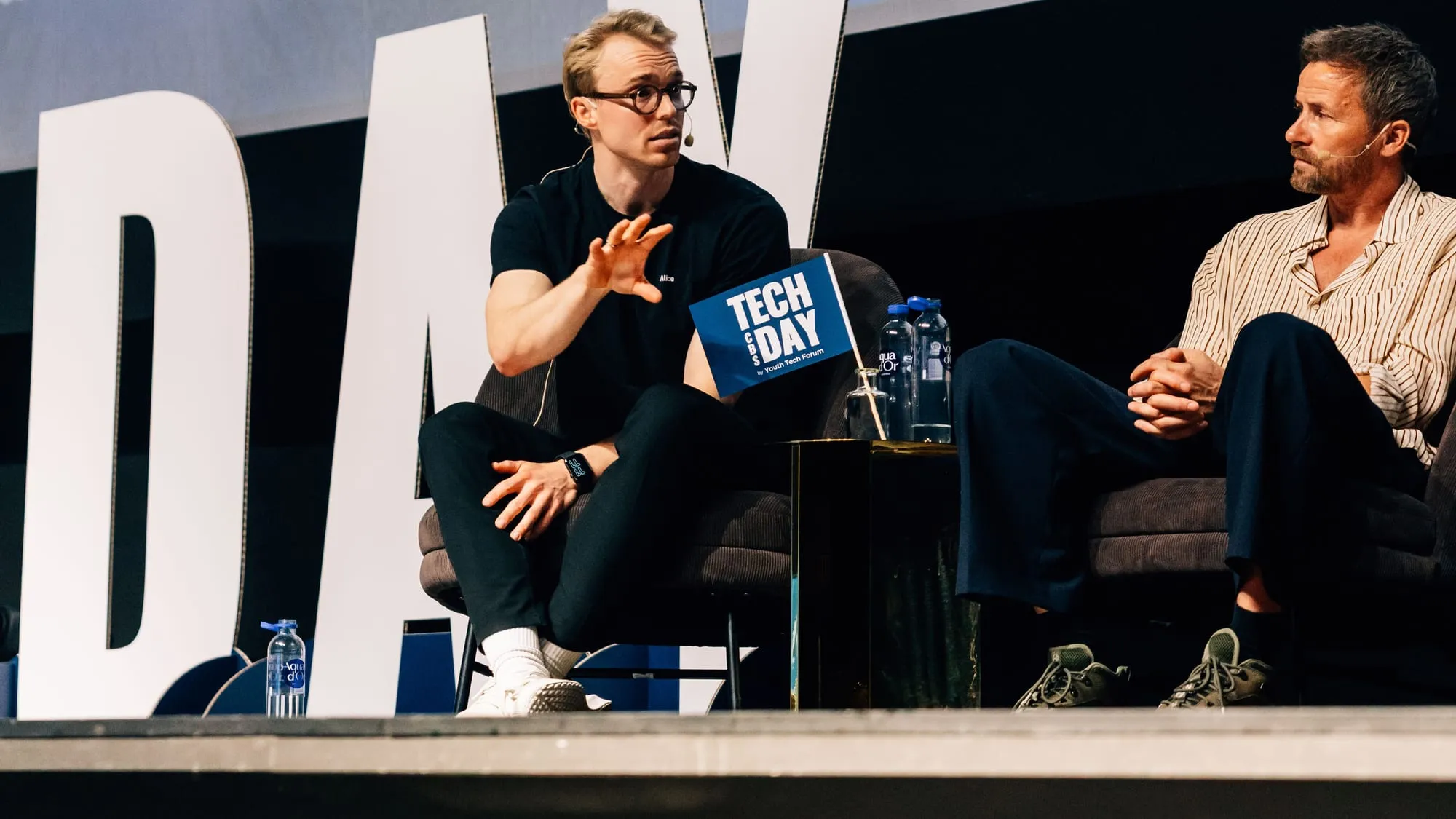
People have always followed a good story, and AI does not change that. Slides, posts and reports are becoming a commodity, because AI makes them in seconds, but finding the right story and telling it well in front of a crowd is not. When I give a talk, AI could easily make my slides, but what the room remembers is the story and how I answer the questions.
Taste and decision-making
Decision-making is the ability to choose well when you have several options. Taste is the nuance of that: when there is no objective best answer, you have to trust your sense of what other people will like.
Both have always mattered, but AI makes them matter even more. With AI, you get more options than ever, and if you are not good at making choices, you either get paralyzed by all the choices or let the AI choose for you.
Vision and ambition
AI changes how much one person can achieve. In a weekend, a student can now build a product that used to take a whole team.
So I think there will be a big premium on people who have a clear direction and are really ready to work hard to reach their goals. They have so much more power than before.
Focus and the ability to switch context
Focus and the ability to switch context already matter today, especially for leaders. I have been a leader in several different companies, and as a leader it is important to be able to jump quickly into a new context and a new problem and then focus really intensely, so you can help your team.
That becomes even more important when we can all lead teams of hundreds of AI agents, as Garry Tan, who leads Y Combinator (which also backs alice), talks about (a16z, August 2026). If you can give each task your full focus for a few minutes and then move on, you can get much more done than before, because the agents work in the meantime. If you cannot, you will fall further behind than before.
What this means for what students should learn
Technology should be a core subject from the early grades
AI will be so profound that understanding technology should be a core subject from the first years of school, and part of subjects like mathematics and physics. Students should learn what AI is, how it works, what it can do, and that it can be wrong.
The core subjects stay, but school must make clear what the focus is
Learning how to learn is actually the most important thing you learn in school, but we have never been explicit enough about it. If you ask students, most do not know that this is what they are learning.
The same goes for problem-solving. Mathematics, the sciences and languages all train it, but in my view, school has never made it explicit enough to students that the most important part is to define the problem and start by asking the right questions.
Most other things the school does, we should keep or optimize slightly, but not completely reinvent. Essays, presentations and oral exams train communication, and people skills are built with others, in class and in sports. I do not think an AI chat can replace that.
And when you choose what to study after school, choose something you are passionate about and that trains these skills, rather than guessing what AI will be worst at.
Exams need two forms

Without AI, to see whether you can stand on your own two feet. I still think pen and paper is the best way to test whether you can solve a problem, think clearly and explain it without help. At the London School of Economics and Imperial College London, most of my exams were pen and paper, even in computer science, and that showed me what I could do on my own.
With AI, but with a much higher bar. We also need exams where AI is a tool. Because you can create so much more, the bar and the ambition should be much higher. Instead of one paper, maybe you write a book (without it becoming quantity over quality). Instead of a small program, maybe you build an entire product.
Both forms can be oral or written.
The best get better, so the gap grows
A well-known BCG study found that AI lifted the weakest consultants the most, by 43 percent (Mollick on the BCG study). That may hold in a controlled experiment, but over months of real work it is not what I see. The people who already have these skills pull ahead, because they know what to point the technology at.
I see it in my own work, and I see it in the rest of the team at alice.
When the best pull ahead, education becomes an even bigger competitive advantage for a society than before. If we do not give the next generations these skills, we will really struggle. If we do, it is a real chance for a small country like Denmark to lead.
Finally, learning with AI needs selective friction
There is a big difference between using AI to learn and using it to be effective. At work, you want to remove as much friction as possible, and that is what most AI tools are built for. But when you need to learn, you need what I call selective friction.
Selective friction: make everything that is not learning easy, like getting started, getting an overview and staying motivated. Keep it hard where learning happens, like when you solve the problem yourself and explain it in your own words.
The hard part should be where you work on what your teacher has pointed out as important. When you solve the problem yourself, write the argument or explain the concept in your own words, the material sticks. You should not be spared that friction.
But most of what leads up to it is not learning. Getting started, getting an overview, finding good practice problems and staying motivated are hard for many students, and that is often where they get stuck. AI can make all of that much easier.
That is how we build alice. It organizes your material, builds a plan, gives you practice questions based on your own curriculum and shows your progress, so it is easier to get started and keep going. And when you get stuck, a regular chat often just gives you the answer, so you skip the learning. Our tutor gives you a hint or explains it in a new way instead, so you get unstuck and get there yourself.
That is what I mean by using AI the right way to learn. What is not learning should be as easy as possible, so you can spend your energy where you actually learn.
Would you still have students sit pen and paper exams? And what would you add to the seven skills, or take away?
We are building something new, alice labs, and we are looking for students to try it first.
Kim Rants, founder and CEO of alice