Estonia gave 20,000 high school students an AI tutor. Denmark should learn from it.
Estonia had its own tutor built, and most students did not use it. For this to work in Denmark, the tool has to be good enough that students choose it themselves.
Estonia gave 20,000 high school students an AI tutor, and most of them did not use it. Students only use an AI study tool if it is better than the ChatGPT or Claude they already have, or better than not using AI at all. So I think Denmark should start this school year with the high schools that want to join. The government or the schools pick the best AI study tools, Danish or international, students and teachers decide for themselves whether to use them, and we measure what the students learn, so that together we can build something great. We need to try, learn and improve as we go, not wait.
Nine in ten final-year high school (gymnasium) students in Denmark use AI for their schoolwork (EVA, 2026), and the government is preparing a national strategy for AI in education. We mostly discuss whether students may use AI, but which tools they use, and how those tools are built, decides whether they learn more or less.
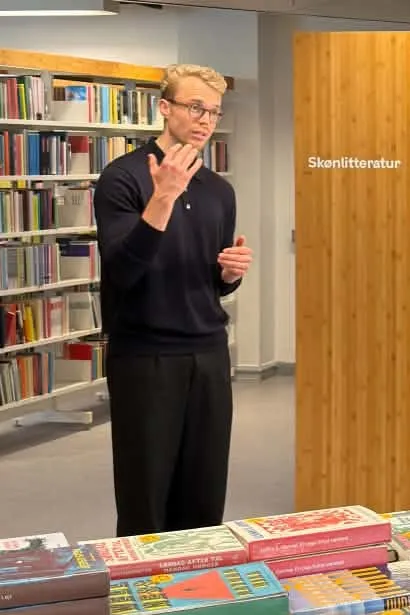
Below, I look at what Estonia’s first year shows, what it takes for a learning tool to beat the chatbot, and what Denmark could do. I build one of these tools, an AI study platform with a personal tutor at its core, so I have an interest in this. That is why I argue for open competition between providers, not for my own product.
The short version
- Estonia gave 20,000 high school students an AI tutor, and most of them did not use it.
- Students only use an AI study tool if it beats the chatbot they already have.
- A good tool makes the process of studying easy but keeps the thinking and learning with the student. I call it “selective friction.”
- Denmark should let schools pick the best tools, let students and teachers choose freely, and measure what students learn.
Catching cheating is right, but it does not help students learn more
In the same EVA survey, two in three of the students said they had cheated with AI at least once. In August, the government responded with an emergency package, including an oral defense of the major written assignment in hf, one of Denmark’s high school programs (Undervisningsministeriet, 2026). Those are reasonable steps against a real problem, but they do not give students a better tool to learn with, and the potential is there. That is what Estonia has tried to do.
Estonia’s teachers began using AI, but most students did not use the tutor
Estonia’s program, called AI Leap, started with the teachers, and by the end of the school year, 94 percent of the participating teachers said they had used AI in their work (AI Leap, 2026).
In late January 2026, about 20,000 students in the first two years of high school got access to ITI, a learning app that OpenAI and Estonian researchers built on ChatGPT to guide students with questions instead of handing them the answer (AI Leap, 2026). About 12,500 activated it, and between 4,000 and 5,700 used it in a given month in the spring. Students who answered a survey rated it 3.1 out of 5, against a target of 4.2, and their most common complaint was that it asked too many follow-up questions (AI Leap, 2026). Our own first tutor had similar problems. It was too polite, talked too much and did not adapt enough to the student.
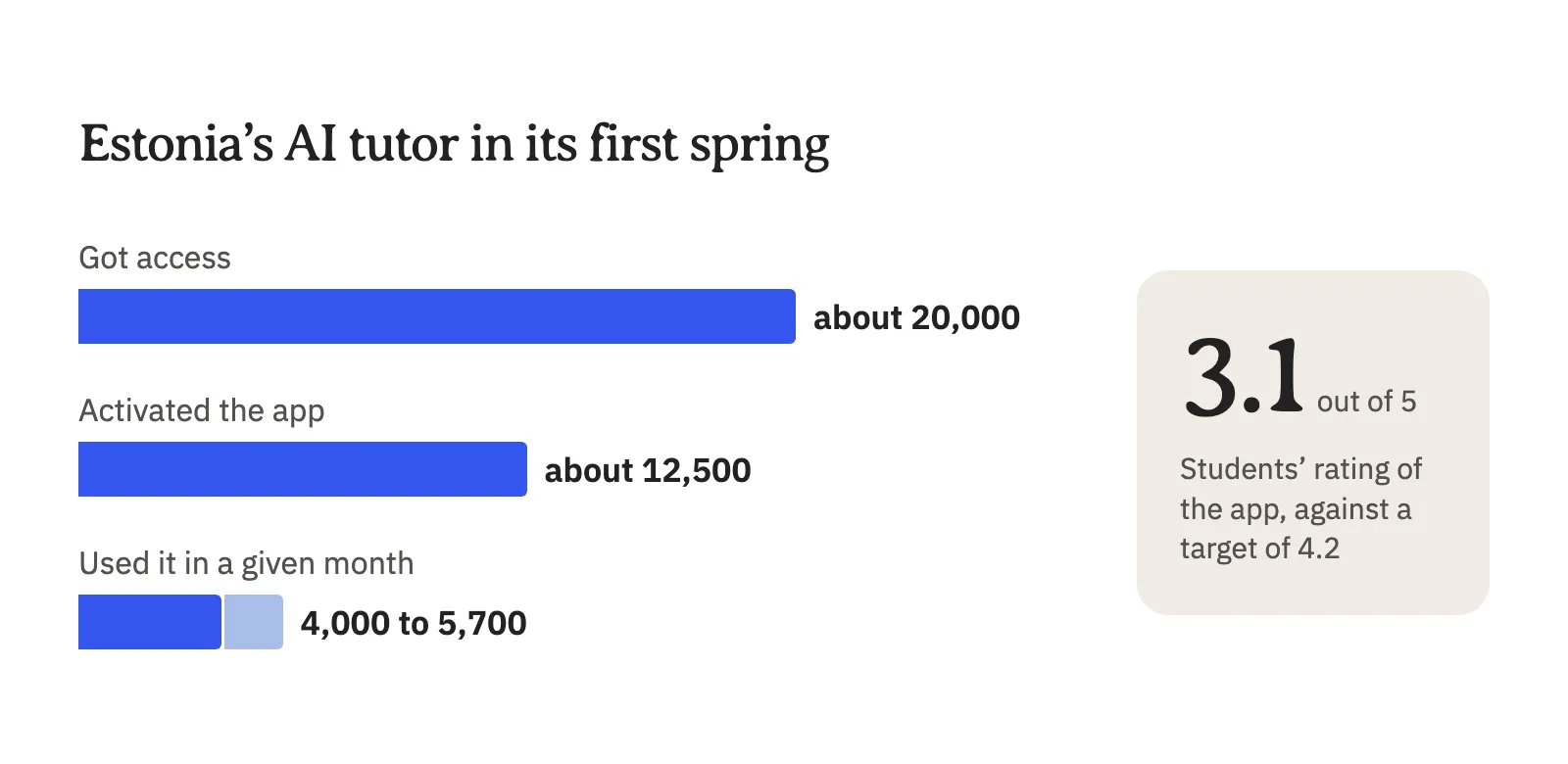
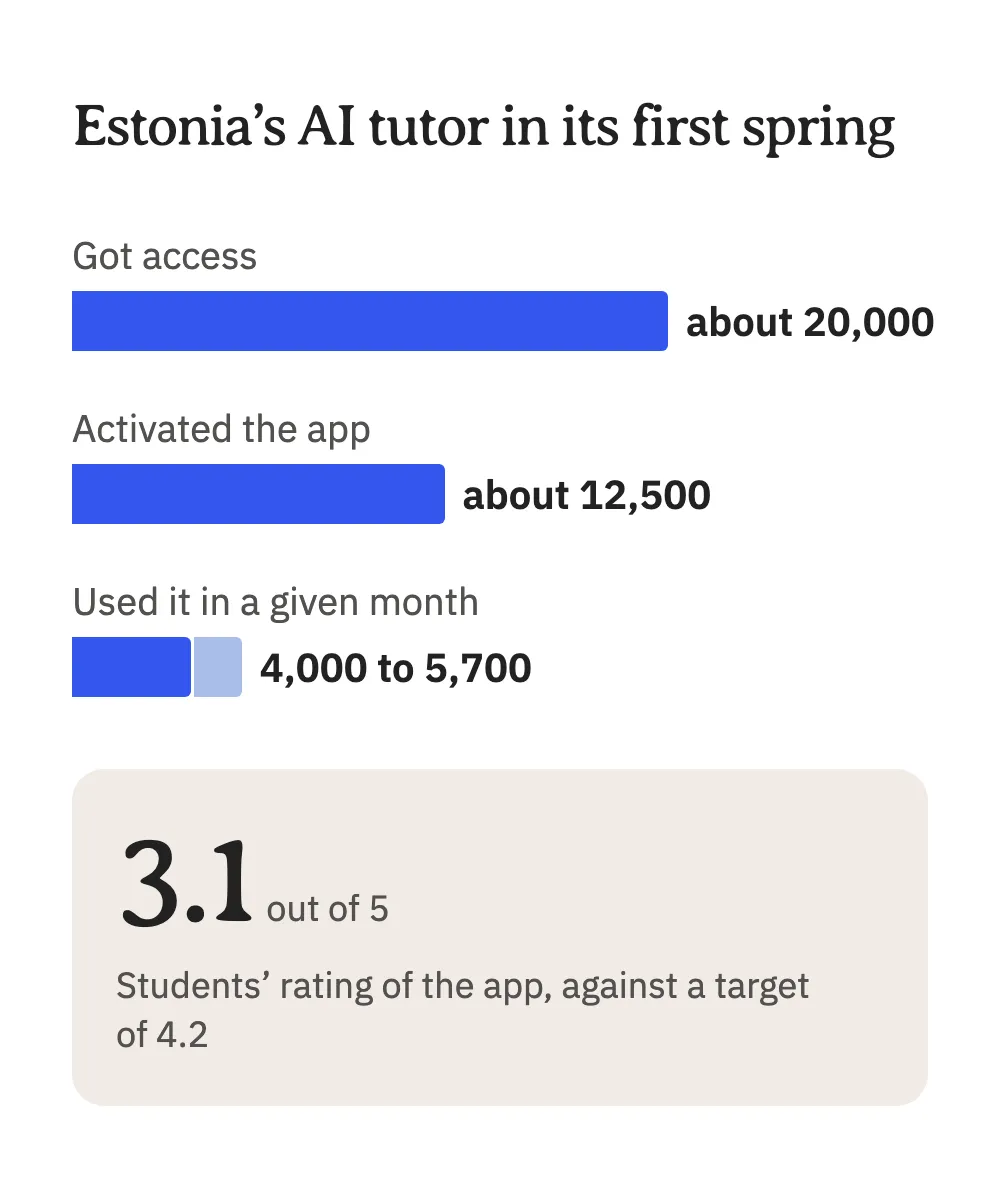
From access to monthly use, with the students’ rating. Source: AI Leap, 2026.
Students only use a tool that beats the chatbot they already have
Imagine a student at eleven in the evening, the night before a test. On her laptop she has a free chatbot that gives her the answer, and an app from school that asks her questions. If the school app only makes the evening harder, she opens the chatbot.
How the tool is built matters for what she learns. In a trial at a high school in Turkey with almost 1,000 students, those who practiced math with a ChatGPT-like version of GPT-4 scored 17 percent lower on the exam than those who practiced without AI. A version of the same model built to give hints instead of answers largely removed that harm (Bastani et al., 2025). But those students were told which version to use. The student at eleven in the evening chooses for herself, so a learning tool has to win that choice.
Selective friction is how a learning tool beats the chatbot
I think the way to win it is selective friction. Make studying easier where the learning does not happen, such as getting started, getting an overview, finding the right exercise and not staying stuck. Keep the friction where the learning happens, in the thinking the student has to do herself. An app that meets every step with a follow-up question puts friction everywhere. A good tool asks the one question that gets her unstuck, for example “Look at the third line. What did you multiply both sides by?” She moves on, and she has done the thinking herself.
I think students choose such a tool over a chatbot when four things are true:
- It works from her own course, her material and her exam. This creates trust.
- It saves her time and is easy to use, so the evening before a test gets shorter, not longer.
- It shows her progress, so the effort feels worth it and she stays motivated.
- It is high quality and actually works for learning.
Students and teachers should decide for themselves
No student should be forced to use an AI tool, and no teacher should either. Some teachers will want to build it into their teaching and others will not, so each teacher should be able to opt in or out. Ivo Visak, who leads Estonia’s program, has written that access to AI does not by itself make anyone learn better (ERR, 2026), and I do not think forcing it on anyone would either. If a tool is good enough, students and teachers will choose it on their own.
Schools should pick between the best providers, Danish or international
Today the state has rules for when students may use AI and how cheating is caught, but no requirements for whether the tools hand over the answer or ask questions. I think the government or the schools should set those requirements and pick the AI study tools that meet them. The tools should be built for learning, protect student data and show the teacher where the class is stuck, never what each student does. They do not have to be Danish. Danish providers should compete with international ones on the same requirements, so students get the best tools.
Denmark can start this school year and measure what students learn
Denmark has already tested AI with more than 10,000 high school students at 75 institutions (Undervisningsministeriet, 2025). I would build on that and start this school year, without waiting for the strategy, with the high schools that want to join. They offer their students and teachers a selection of these tools, with guidance on how to use them to learn rather than to get answers. Students give feedback from the first week, providers improve their tools, and researchers measure what the students learn. Denmark then rolls out what works and stops what does not.
The goal is that students learn the most
The goal should not be that students use AI, or that a particular tool wins, but that they learn the most. Those of us who build the tools should have to earn the students’ choice. Estonia has shown that a country can give its students an AI tutor at national scale. I think Denmark can do it even better.
Should Denmark start with high school? Or is there a better place to start?
Kim Rants, founder and CEO of alice