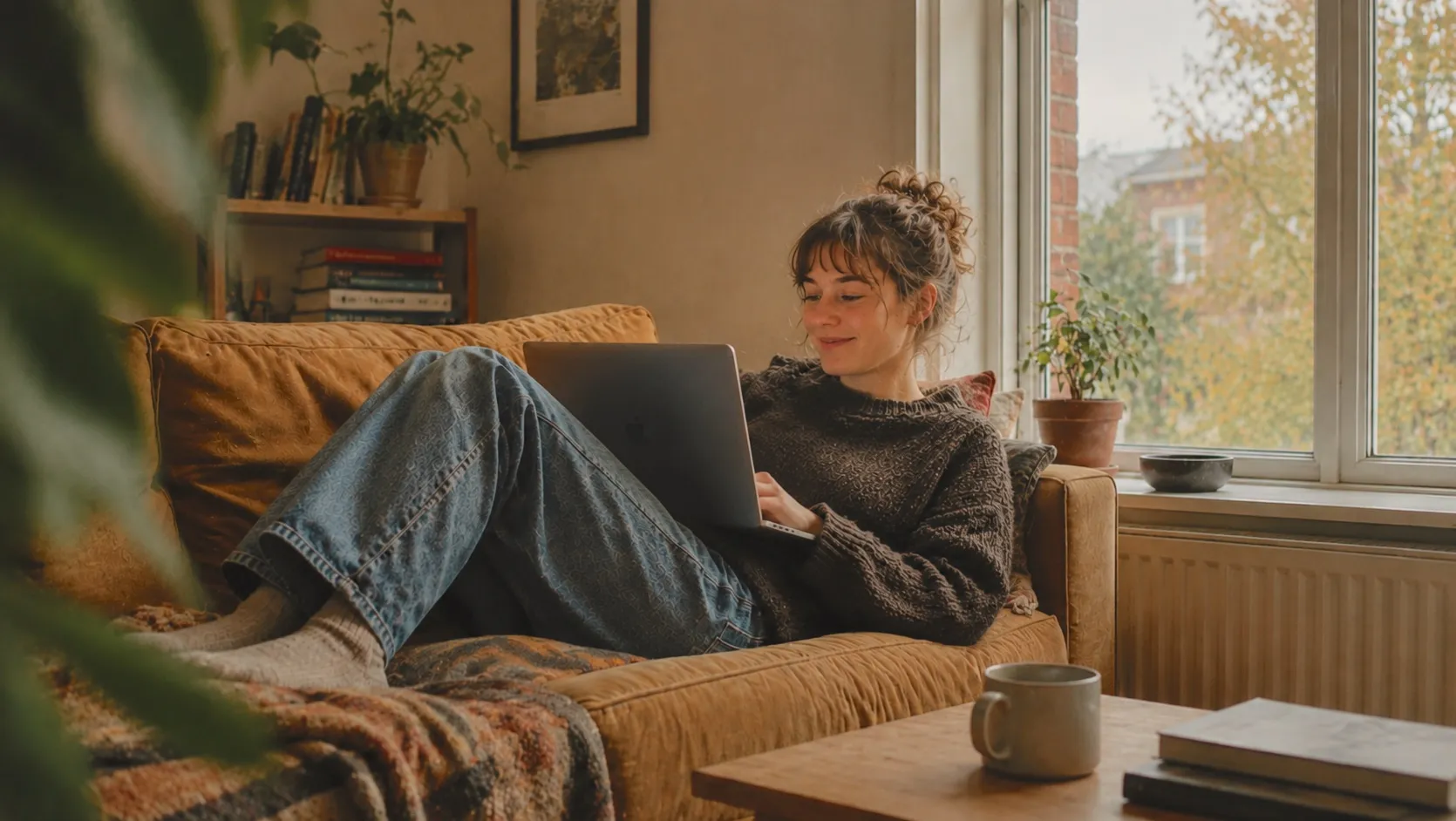
The story of Isabella, and how a personal AI tutor changed her life
A made-up story about a high school student and an AI tutor that helps her learn without doing the work for her. It could become reality very soon.
Imagine a girl called Isabella.
She is 17 and in her second year (2.g) of gymnasium, the Danish upper secondary school. She dreams of becoming an engineer, so she has chosen Math A, which you need to get into engineering at DTU, the Technical University of Denmark. In October she gets her first big test back. At the top of the page it says 02, the lowest grade that still passes. She knows it is not enough to get into her dream program.
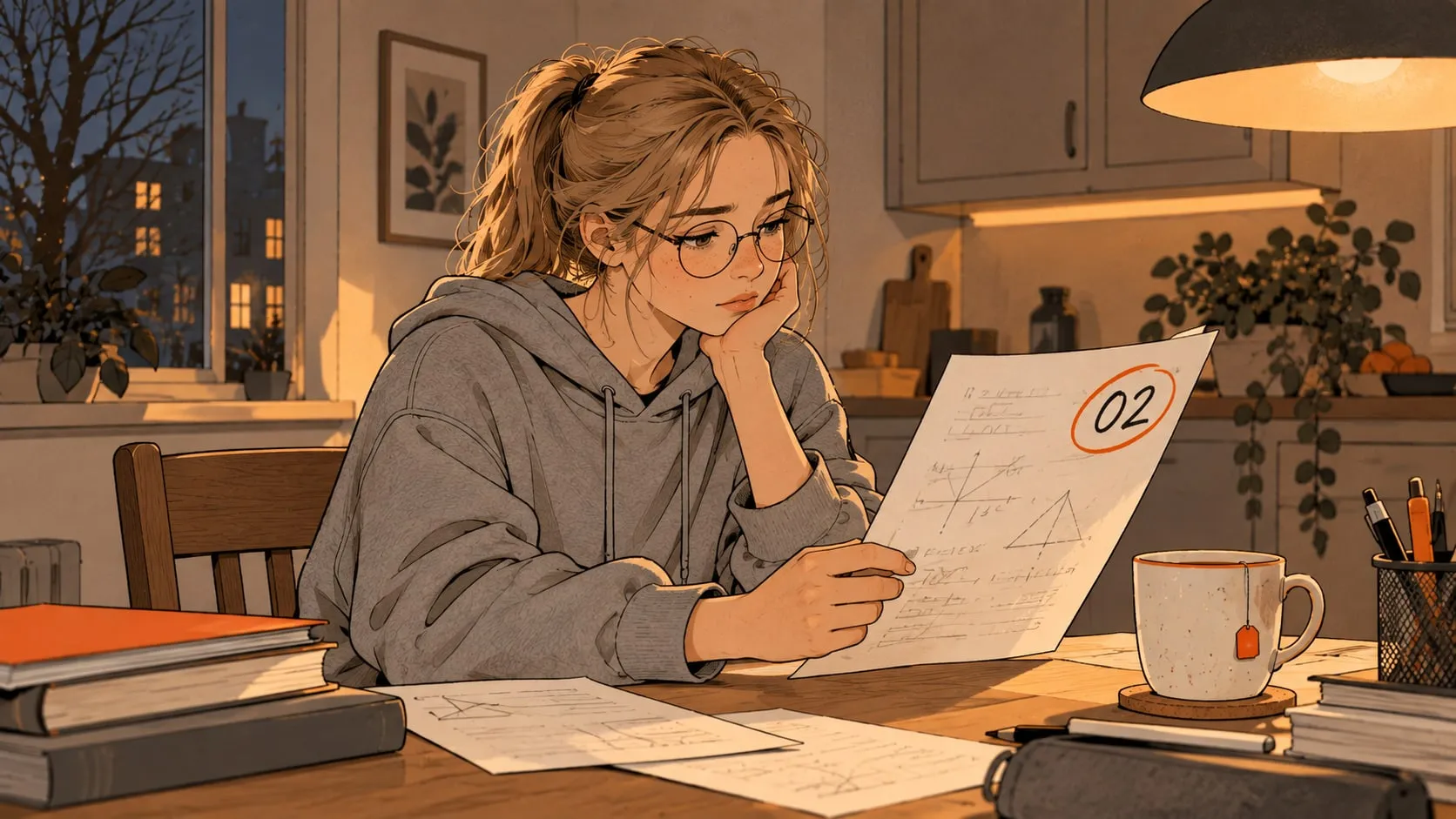
It comes as a surprise, because Isabella is not lazy. She does her homework and goes to class, and in class she follows most of what her teacher, Mette, writes on the board. But when she sits alone with the problems at home, she gets stuck. Her parents cannot help her with Math A, a private tutor costs more than the family can afford, and Mette has 28 other students in the class.
Finding the gap nobody had time to look for
This year, Isabella’s school is one of the first in Denmark to give every student a personal AI tutor. The tutor knows the course, and it has access to her notes and assignments. That same evening she shows it her test.
Isabella is convinced the problem is differentiation, because that is what the class is working on. But before long, the tutor finds out that the problem goes further back. She can differentiate just fine. It goes wrong afterwards, when she has to solve the equation, because the algebra with fractions from 8th grade never really clicked.
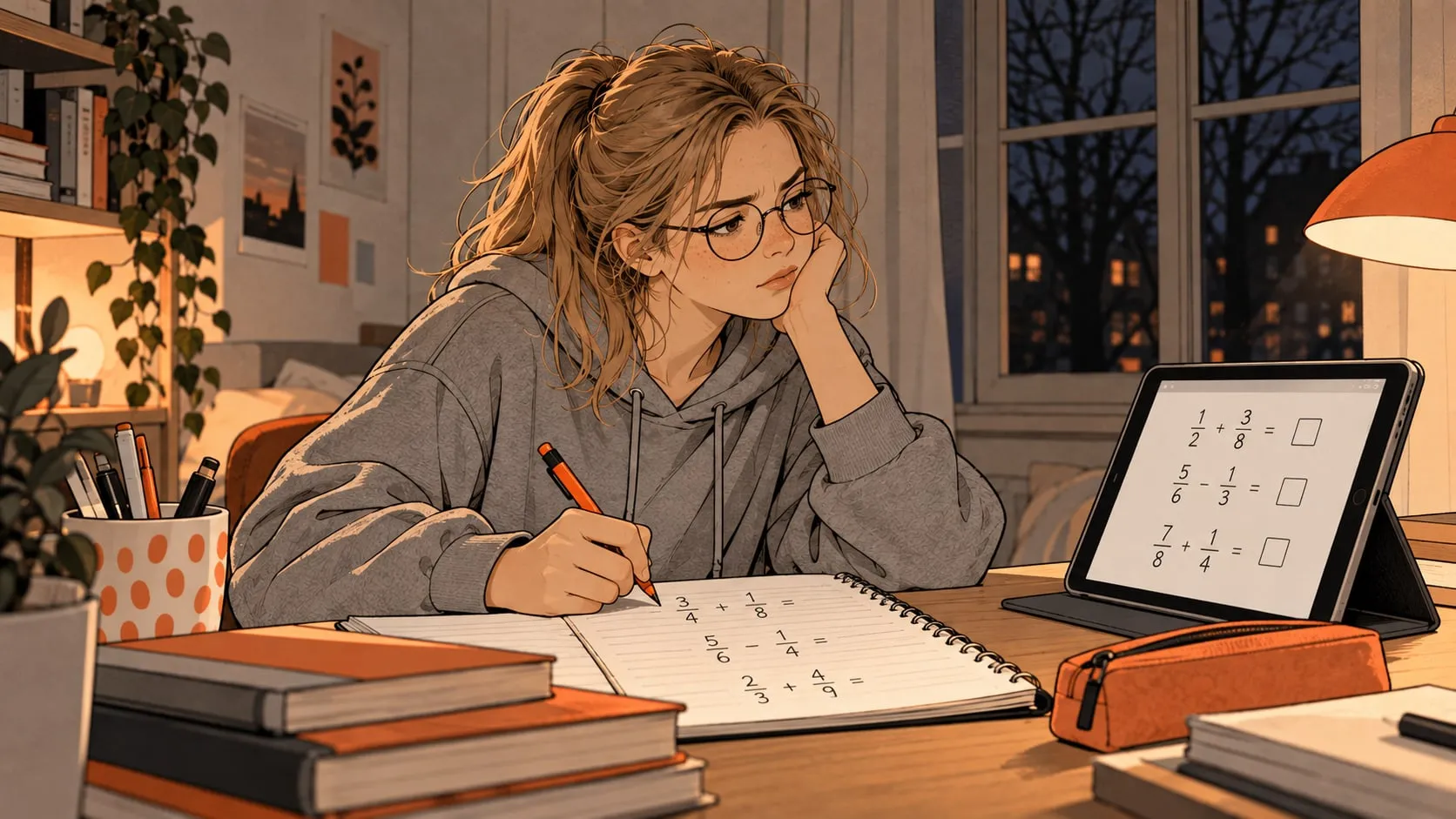
So the tutor sends her back to fractions and equations, twenty minutes a day. Isabella finds it annoying. It feels like she is going backwards while the rest of the class moves forward. But when the tutor shows her three mistakes from the test, all of the same kind, she decides to give it a chance.
Pen and paper
In class, they still do math with pen and paper, and it is Mette who teaches. Isabella does her homework by hand before she asks the tutor for help. At first she thought that was old-fashioned. After a few months she understands why: the tutor can help her understand, but it should not learn it for her. And pen and paper is still a fantastic and very basic way to learn to “stand on your own”.
At the whiteboard one January
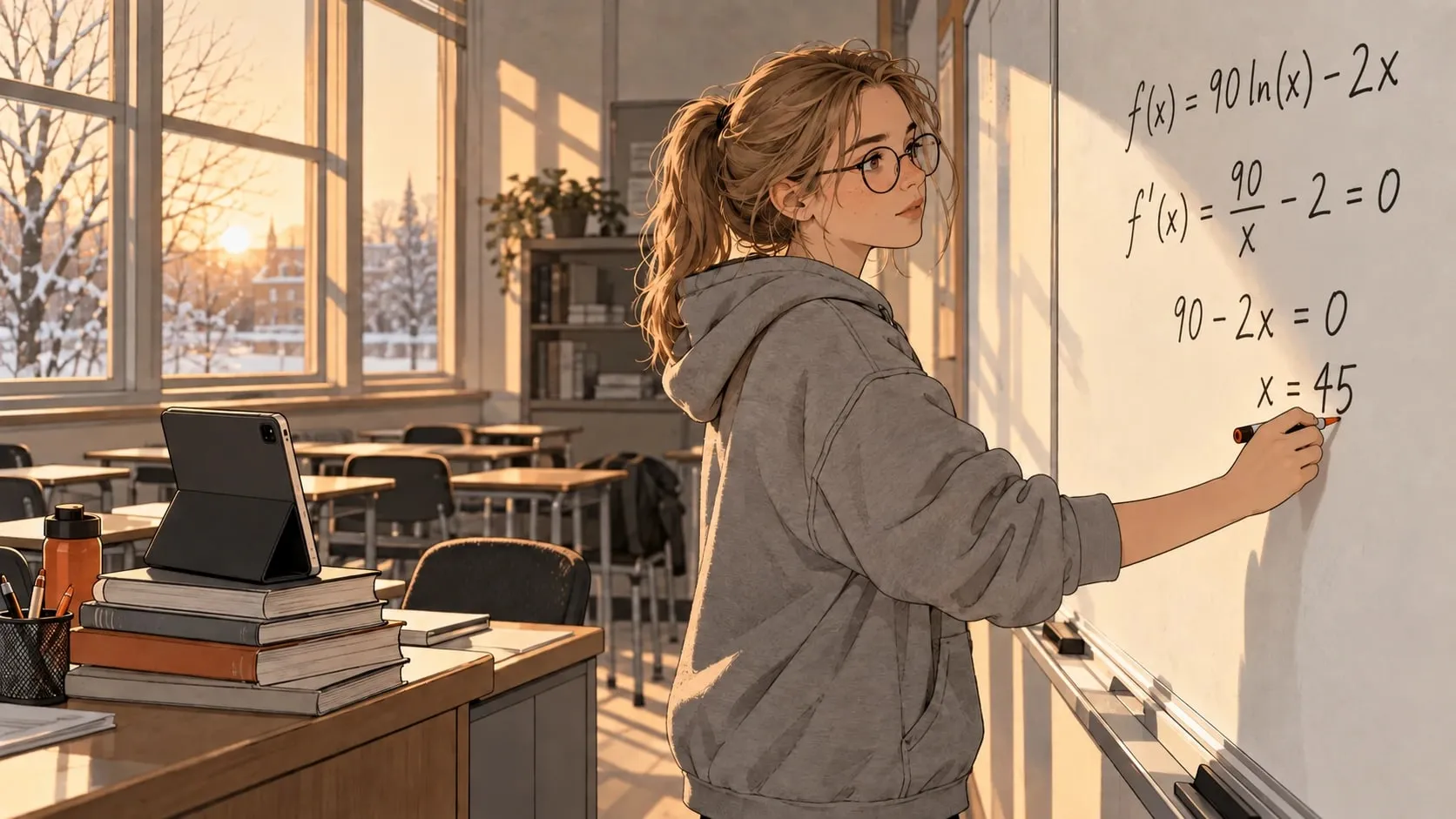
It is a Tuesday afternoon in January, and the school is almost empty. Isabella has stayed behind in the classroom, because she thinks better when she can stand up and write big on the whiteboard. She has leaned her tablet against a pile of books on the teacher’s desk and turned on the camera, so the tutor can follow along.
She is working on an optimization problem: at what price does a company earn the most? She differentiates the function, sets the derivative equal to zero and solves the equation. The result is a negative price. She erases a line, writes it again and gets the same thing.
“I’m stuck,” she says.
The tutor has followed along and can see where it went wrong. But instead of telling her, it asks, “Look at the third line. What did you multiply both sides by?”
Isabella looks. She has multiplied by x to get rid of the fraction, but only on one of the terms. It is the same mistake she has made since October, just hidden inside a harder problem. She fixes it, solves it again, and this time it works out: the company earns the most at a price of 45 kroner.
“That’s right, nicely done,” the tutor says, and gives her a slightly harder one.
A tutor, not a friend
Not every evening is about math. One evening in February, after a hard week, Isabella opens the tutor at eleven and asks if they can just talk for a bit. The tutor answers kindly, but it does not pretend to be her friend. “I’m here to help you learn, so I’m not the one to lean on for this. Who could you talk to tonight?” It encourages her to talk to a friend or her parents, and if something is weighing on her, she can also go to Mette. The math can wait until tomorrow. Isabella puts the tablet away and texts her friend.

Five minutes with her teacher, Mette
Meanwhile, every Monday, Mette gets an overview from the personal AI tutors of where each of her students is stuck. Before, she only found out from the tests, weeks too late. Now she can see that four students are struggling with the same thing, and she spends fifteen minutes on it at the start of the next lesson. By spring, most of the class is doing better than in the year before the AI tutor was introduced. Isabella is one of those who has improved the most.
Isabella does not mind that Mette can see where she is stuck, because Mette no longer sets the grades during the year. A separate, objective AI assesses the tests the same way for every student, and the final exam is still marked by external examiners. That frees Mette to do what she is best at: helping her students learn.
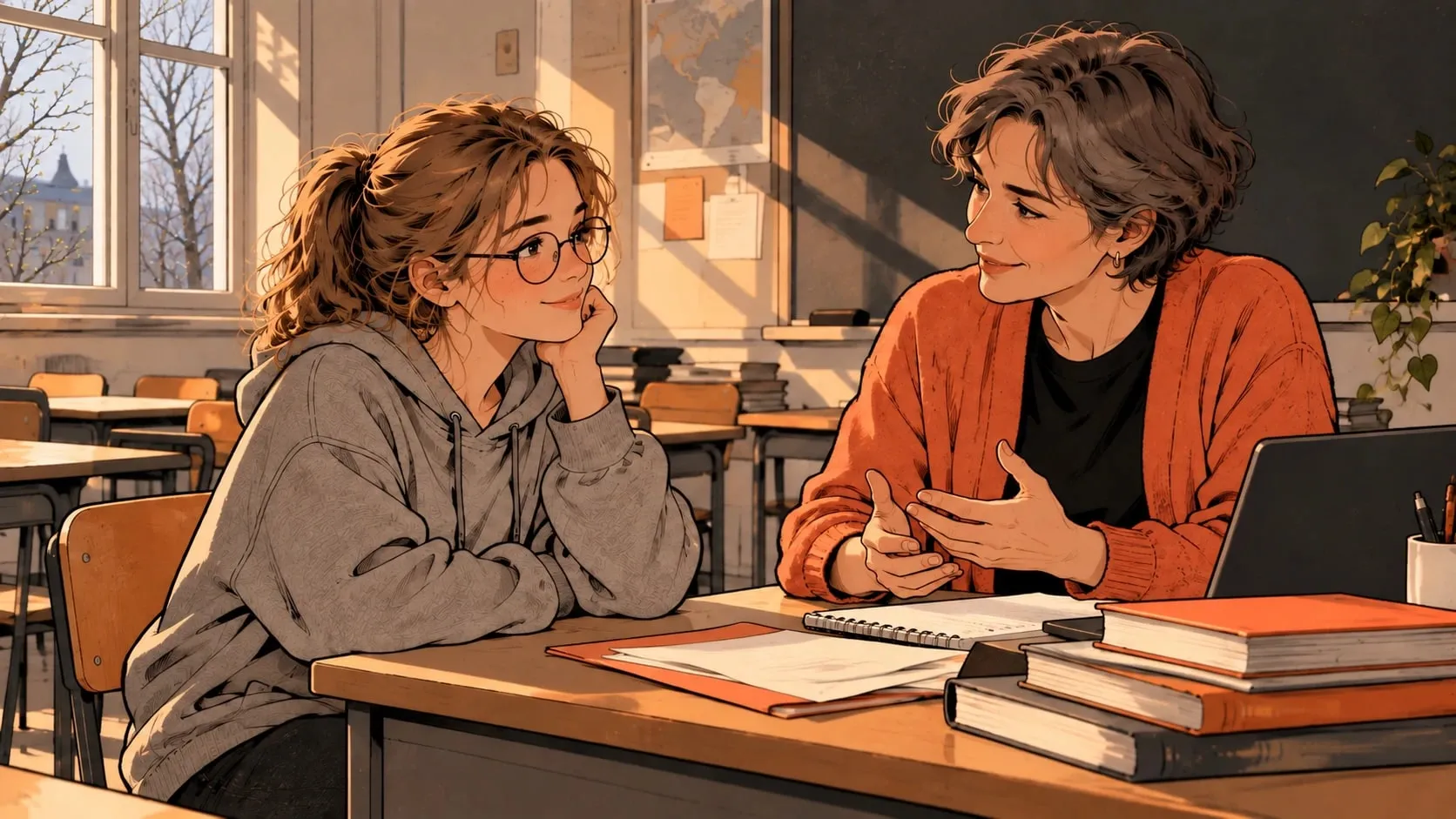
In March, Mette asks Isabella to stay for a moment after class. She has followed the work on fractions in the overview, and she tells Isabella what she needs to hear. Isabella is not bad at math. She has some gaps from earlier years, she is closing them, and that takes more work than most people are willing to put in. The conversation lasts five minutes, but it is the one Isabella thinks of when the exam gets hard.
The exam
In May of her final year (3.g), it is time for the written exam. It lasts five hours, and the first part is done by hand, with pen, paper and a formula booklet. There is no tutor in the room, only Isabella and the problems.
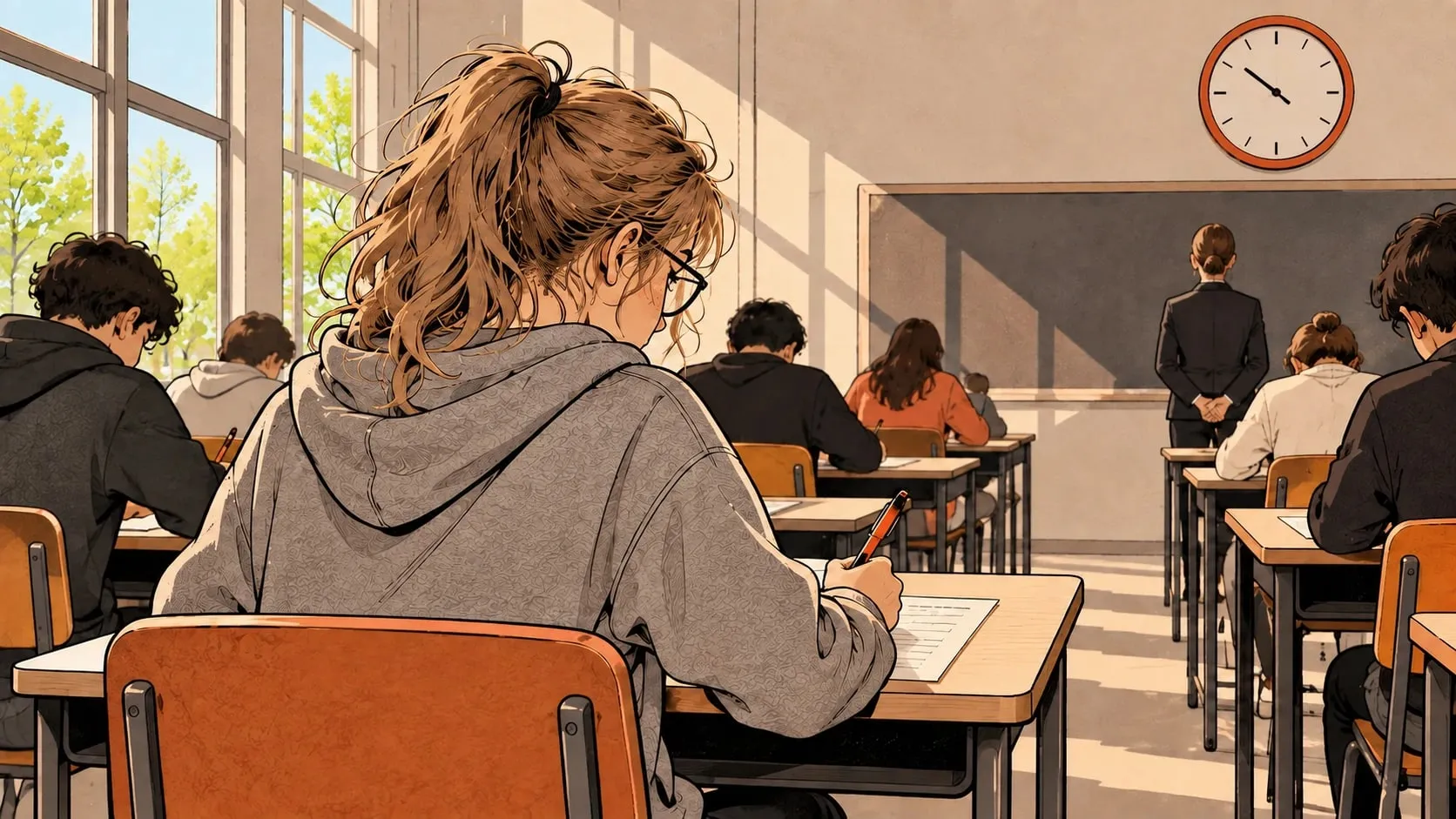
Isabella gets a 10, the second-highest grade, and it is enough. That summer she applies to DTU, and at the end of July she gets the answer: she has been accepted into her dream program. Isabella has been in the driver’s seat the whole way. The tutor did not do the work for her, but it helped her reach her potential.
After the summer break she starts as an engineering student. She still uses the tutor, but it has adjusted to her level. It challenges her more, but it still remembers where she used to struggle. She has learned how to learn math.
Why I wrote this
Isabella is made up. But I think most teachers recognize situations where an individual student does not get the personal teaching she needs to reach her potential. The pace and the level of the classroom teaching may not fit her.
The tutor in the story does what a good human tutor does. It finds what the student is actually missing, it asks instead of telling so she does the thinking, and it adapts as she gets better.
We have known for a long time that one-to-one teaching is one of the most effective ways to learn. One of the most remarkable results in education research came from Benjamin Bloom in 1984. The average student with a personal tutor did better than 98 percent of the students taught in an ordinary class (Bloom, 1984). The problem has always been that there are not enough teachers for every student to have their own. With AI, it can become possible for everyone for the first time, not only for those whose parents can afford it.
Two other things matter to me in the story. The first is the teacher. When the one who helps you is no longer the one who grades you, the relationship between teacher and student can become much better and more transparent. They are always fully on the same team.
The second is that a tutor should be very good at helping you learn, and point you to the people around you for the rest - an AI tutor should not have a personal relationship with young people. But it can definitely be a sparring partner and help them learn.
Most of this is close. alice’s tutor can already work from a student’s own material, track what she has learned down to the smallest pieces, ask instead of tell and test her the way an exam would. Reading a photo of her handwritten work is coming soon. What it cannot do yet is follow her work on a whiteboard as she writes. That is within reach. I think a story like Isabella’s could be reality very soon, probably as soon as next year, if we allow it. Personally, I hope we dare to set our ambitions high here in Denmark.
You can try alice’s tutor as it is today.
Kim Rants, founder and CEO of alice